
A trust is a legal arrangement in which a grantor transfers property to a trustee who manages it for the benefit of a beneficiary. If you are weighing whether to set one up, this guide walks you through the essentials in plain language.
You will learn who the three key parties are, the main types of trusts, the reasons people create them, how beneficiaries actually get paid, and the costs and downsides that most guides quietly leave out.
Key information
- A trust is a legal arrangement in which the creator (grantor) transfers assets to a trustee, who manages them for the benefit of the beneficiary.
- Every trust has three parties: the grantor, who sets the terms; the trustee, who has a fiduciary duty to manage the trust; and the beneficiary, who receives the benefits of the trust.
- The three main types are revocable trusts (which can be changed during the grantor’s lifetime), irrevocable trusts (which can provide asset protection and tax benefits), and testamentary trusts (which take effect after death).
- The primary purpose of a trust is to avoid probate, which can be time-consuming, costly, and public.
- By 2048, approximately $106 trillion is expected to be transferred from Baby Boomers to younger generations.
- An irrevocable trust generally means giving up significant control over the assets in exchange for potential asset protection and tax benefits.
- Estate planners may recommend considering a trust for estates worth around $160,000–$200,000 or more; however, a trust only works as intended if it is properly funded with assets.
What Is a Trust? The Core Definition in Plain English
A trust (legal arrangement) is a relationship in which one person holds legal title to property while being obligated to keep or use it for the benefit of someone else. According to the IRS, a trust arises under state law. It runs on the grantor’s written instructions.
Think of it as a set of rules attached to your assets. You decide who manages the property, who benefits from it, and when. The trust document translates those wishes into a binding legal structure that outlives casual verbal promises.
How a trust works step by step
Creating a trust brings a separate legal entity into existence. Once the settlor signs the document, ownership of assets moves out of their personal name and into the name of the trust.
That transfer looks different for each asset. Real estate needs a deed, bank accounts require an ownership change, and personal property passes through an assignment. Only after this retitling does the trust actually control anything.
Trust vs. simply owning assets outright
Owning assets outright means your name sits on every title, and the property passes through your estate directly. A trust separates legal title from beneficial enjoyment.
The trustee holds the assets under a fiduciary duty, a legal obligation to act loyally and carefully for the beneficiaries rather than for personal gain. This separation is why trusts can control timing, protect heirs, and manage property that plain ownership cannot. It matters now more than ever: an estimated $106 trillion is set to pass from Baby Boomers to younger generations by 2048.
The Three Key Parties Every Trust Needs
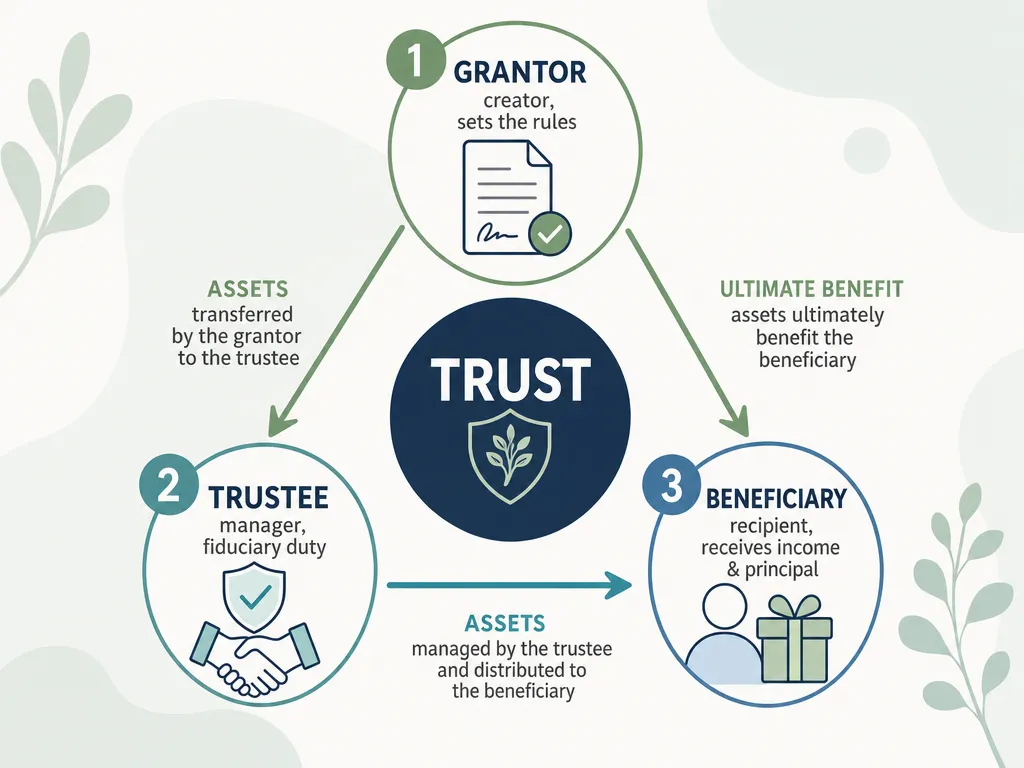
Every trust (legal arrangement) involves three roles: the grantor who creates it, the trustee who manages the assets, and the beneficiary who receives the benefits. This terminology stays constant no matter what type of trust you set up. Understanding each role is essential before you commit.
Grantor (or settlor): the creator
The grantor starts everything. Also called the settlor, this person establishes the trust and transfers property into it. The grantor sets the rules: who benefits, when distributions happen, and under what conditions.
These instructions become the trust’s governing terms. Once assets move into the trust, the grantor’s original wishes shape how everything unfolds afterward.
Trustee: the manager and fiduciary
The trustee holds and manages the trust’s assets. A trustee can be an individual or an institution: an investment advisor, a trust company, an attorney, or a trusted family member.
This is a serious job. The trustee owes a fiduciary duty to all beneficiaries, both present and future, and must follow the trust’s terms free from outside influence.
That fiduciary obligation splits into three parts. The duty of loyalty means avoiding conflicts of interest. The duty of skill and care demands prudence and diligence. The duty of impartiality requires treating multiple beneficiaries fairly.
Beneficiary: the recipient
The beneficiary is the person, or people, for whose benefit the trust exists. Beneficiaries receive income, principal, or both, according to the terms the grantor laid out.
A trust can name one beneficiary or many. It can even provide for beneficiaries who are not yet born, which is why the trustee’s duty extends to future recipients too.
The Three Main Types of Trust Explained
The three core types are the revocable living trust, the irrevocable living trust, and the testamentary trust. A revocable trust stays changeable during your life, an irrevocable trust locks in for tax and asset-protection benefits, and a testamentary trust is created by a will and activates only after death.
| Type | When it takes effect | Can you change it? | Key trade-off |
|---|---|---|---|
| Revocable living | While you are alive | Yes, anytime | Keeps control, no tax break |
| Irrevocable living | While you are alive | No | Locked, but tax and creditor benefits |
| Testamentary | After death, via will | Only by rewriting the will | Passes through probate |
Revocable living trust
A revocable living trust is the most flexible option. The settlor can amend or revoke it at any time while alive and mentally competent, keeping full control of the assets.
Oregon State Bar describes three phases. First, while you are alive and healthy, you serve as your own trustee and manage the property for yourself. Second, if you become incapacitated, a named successor trustee steps in. Third, after death, that successor trustee distributes what remains.
Irrevocable living trust
An irrevocable trust works differently. Once created, it cannot be changed or revoked, and the settlor gives up ownership of the assets placed inside. That surrender is the point. In exchange for losing control, the arrangement can reduce estate taxes and shield assets from creditors.
Testamentary trust
A testamentary trust, sometimes called a trust under will or will trust, lives inside your will. It comes into existence only after you die, so it is not a living trust at all. Because the will must go through probate first, this type offers less privacy than a living trust set up during your lifetime.
Why People Use Trusts: The Main Purposes
The main purpose of a trust (legal arrangement) is to control how and when assets pass to beneficiaries while skipping probate. Beyond that, a trust protects minors and special-needs dependents, shields wealth from creditors, and keeps your affairs private.
Avoiding probate court
Probate is the court process that settles an estate after death. It is slow, costly, and a matter of public record. A properly funded trust bypasses it entirely, so beneficiaries receive assets faster and more privately. Avoiding probate is the main reason many people set up a trust, since the process itself brings cost, delay, and added complexity.
The problem multiplies with property. If you own real estate in more than one state, probate may be required in each state where the property sits. A trust holds those titles under one arrangement, avoiding parallel court cases.
Controlling distribution timing and rules
A will hands everything over at once. A trust lets you write rules. You might release half the principal at age 35 and the rest at 50, or leave payouts to the trustee’s discretion.
This control is why families use trusts for young or vulnerable heirs. A trust for a disabled child can last that person’s entire lifetime while preserving eligibility for government benefits. Without one, a probate court may appoint a costly conservator to manage the money instead.
Protecting assets and privacy
Here the trust type matters. Assets placed in an irrevocable trust are likely protected from creditors, meaning they cannot be seized in a lawsuit, bankruptcy, or divorce when the rules are followed. That protection makes irrevocable trusts popular with lawsuit-prone professions like doctors and attorneys.
Privacy is the quieter benefit. Unlike a public will, a trust keeps who gets what out of the court record.
How Beneficiaries Actually Receive Money From a Trust
Beneficiaries receive money from a trust when the trustee follows the written rules the grantor set out in the trust document. Payouts can be a lump sum, scheduled installments, distributions tied to age milestones, or discretionary amounts for specific needs like education or medical care.
Types of distributions
The trust (legal arrangement) splits payouts into two structures: mandatory and discretionary. Mandatory distributions are scheduled, meaning the trustee must pay on set terms. A common example: half the principal becomes available on request at age 35, with the rest released at 50.
Distributions also fall into two categories by source. Principal is the original property placed in the trust. Income is what those assets generate: interest, dividends, rent, and royalties.
That distinction carries tax weight. Principal distributions are usually not treated as income and escape income tax, while income distributions generally must be reported and taxed on the beneficiary’s return.
When the trustee has discretion
With discretionary distributions, the trustee decides how much to release and when, guided by the standards the grantor wrote in. A parent might direct payments only for tuition, a first home, or genuine hardship.
Here the trustee’s fiduciary duty matters most. The trustee must weigh each beneficiary’s needs impartially and stick to the trust’s terms, not personal preference. Milestones like age 25 or graduation are popular precisely because they hand the trustee clear, objective triggers to act on.
The Downsides and Costs of a Trust Most Guides Skip
A trust (legal arrangement) is not free, and it is not effortless. The main tradeoffs are cost, ongoing administration, the discipline of funding it correctly, and: with an irrevocable trust, giving up control for good.
Setup and administration costs
A revocable living trust generally costs more in legal fees than a simpler estate plan. You pay a lawyer to draft it, then live with ongoing administration that carries its own costs and delays. Exact attorney fees vary widely by state and complexity, so ask for a written quote before you commit rather than relying on a rule of thumb.
One more myth worth killing. Setting up a revocable living trust is not a tax strategy. Its assets face death taxes exactly as they would under a simpler plan.
Loss of control with irrevocable trusts
An irrevocable trust means permanent loss of control. Once you transfer assets in, you cannot change or revoke the trust or take the property back. That permanence is the price of the creditor protection and tax benefits covered earlier (see Section 4).
Common mistakes when funding a trust
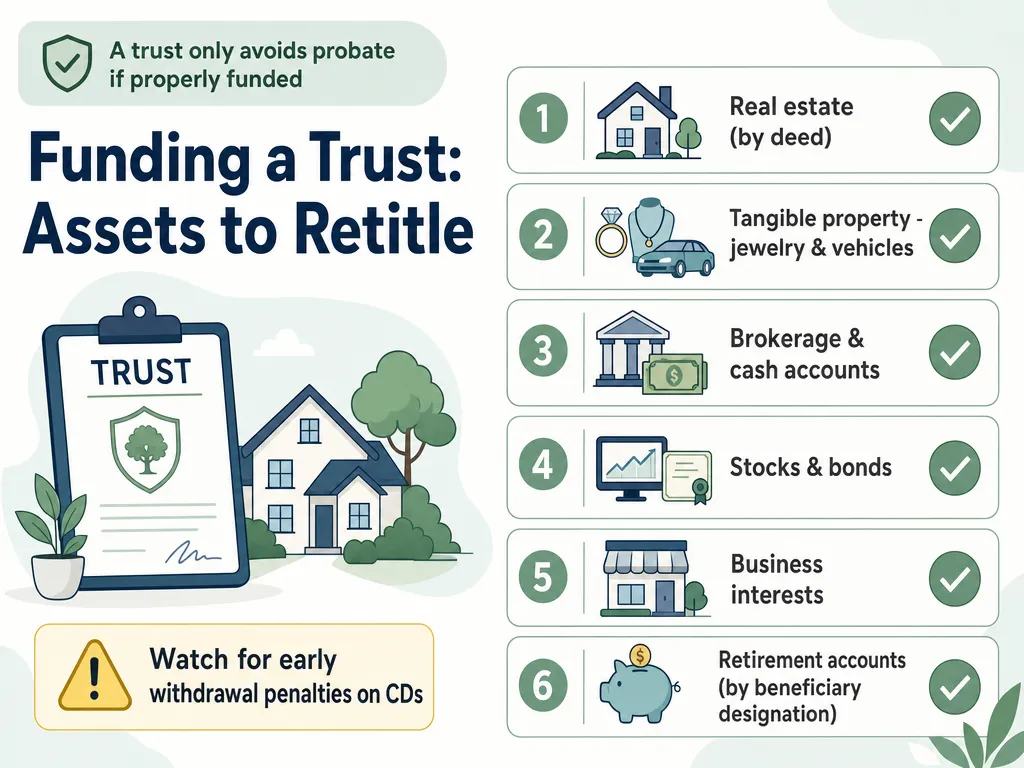
The biggest mistake is leaving the trust empty. A trust only avoids probate if it is properly funded. Funding means retitling assets into the trust’s name: real estate by deed, tangible property like jewelry and vehicles, brokerage and cash accounts, stocks and bonds, business interests, and retirement accounts by beneficiary designation. Watch for early withdrawal penalties on CDs when you move cash accounts.
Quick Answers to the Trust Questions People Ask Most
What is the main purpose of having a trust?
The main purpose of a trust (legal arrangement) is to control how and when your assets reach your beneficiaries while avoiding probate, the court process that adds cost, delay, and public exposure. A trust also protects minors, special-needs dependents, and, with an irrevocable structure, shields assets from creditors.
What is the downside of a trust?
A trust is not free and not effortless. A revocable living trust costs more in legal fees than a simpler estate plan, and its ongoing administration creates its own expenses. You also have to fund it correctly by retitling assets into the trust, or it will not avoid probate. With an irrevocable trust, the tradeoff is steeper: you give up control of those assets permanently.
How do beneficiaries get money from a trust?
Beneficiaries receive money when the trustee follows the written rules the grantor set out. Some distributions are mandatory or scheduled, others are discretionary, left to the trustee’s judgment. A common example: half the principal available at age 35, the rest at 50. Payouts split into principal and income, which matters at tax time.
What are the three types of trust?
The three core types are the revocable living trust, the irrevocable living trust, and the testamentary trust. The first stays changeable during your life; the second locks in for tax and asset protection; the third is created inside a will and takes effect only after death.
What is the difference between a trust and a will?
A will takes effect only at death and must pass through probate, making it public. A living trust works during your life and after, and it skips probate entirely for funded assets.
Do I actually need a trust?
Many planners suggest a trust makes sense once you hold roughly $160,000 to $200,000 or more in assets, though this is an orientation range, not a legal rule. If you own real estate in multiple states, have minor or special-needs beneficiaries, or want privacy, talk to an estate attorney about your options.
Sources
- irs.gov/charities-non-profits/definition-of-a-trust – IRS – Definition of a Trust
- osbar.org/public/legalinfo/1119_WhatIsATrust.htm – Oregon State Bar – What Is a Trust
- privatebank.bankofamerica.com/content/ust/en/financial-education/understanding-trusts.html – Bank of America Private Bank – Understanding Trusts