
Who inherits what, and who speaks for you if you can't
Most people come here for the Will and leave understanding the other three. One document names your heirs and a guardian for your children. The rest decide who handles your money and your medical care while you are still here and cannot say so yourself.
Answer the first questions free. You pay when you are ready to generate the documents.
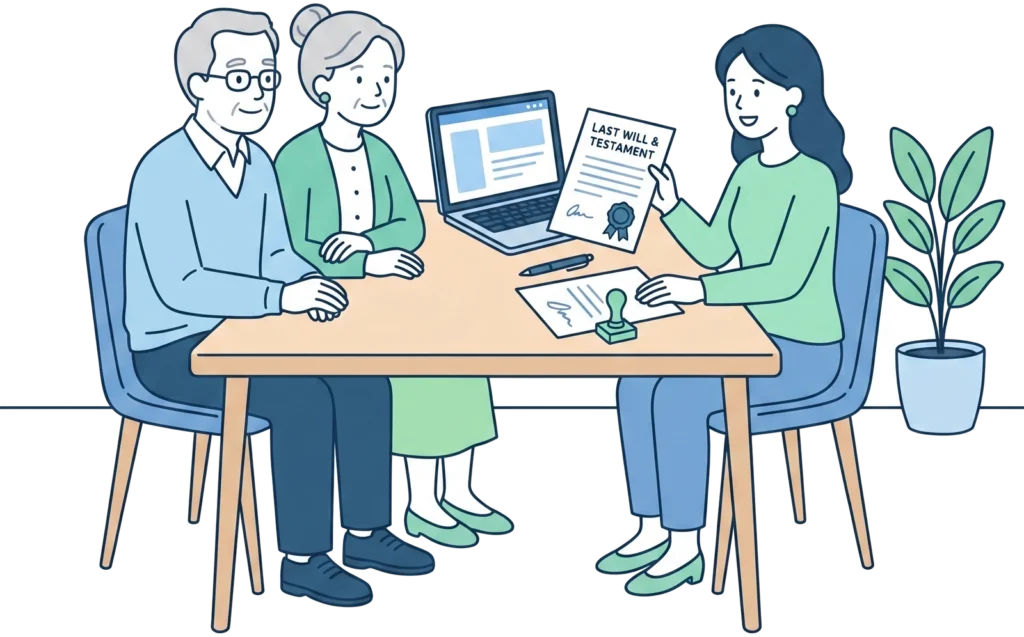
Is a Will enough for you?
Usually, yes. A Will does the job when your estate is straightforward: you rent, or you own one home, your beneficiaries are adults you trust, and nobody is likely to contest anything.
There is one thing it does not avoid. A Will goes through probate, the court process that verifies it and supervises the handover. Probate is a matter of public record, it runs for months in most counties, and your executor is the one filing the paperwork.
If that is the part you want gone, read the Trust plan instead. A Trust does everything a Will does and skips probate. It costs more at the start, and it asks something of you afterwards: assets only skip probate once you have actually moved them in.
A Will fits when
- You want your wishes on record and a guardian named for your children.
- Probate in your county is not something you are trying to spare anyone.
- You would rather spend $199 now than $499 on a structure you do not need.
Look at a Trust when
- You own a home and want it to pass without a court process.
- You would rather your estate stayed off the public record.
- Someone in the picture might argue, and you want fewer openings for that.
Four documents, and what each one actually prevents

Last Will & Testament
Names who inherits what, and names the executor who carries it out. If you have children under 18 it also names their guardian, which is the clause people skip and the one a court leans on hardest.

Advance Care Directive
Sets out the treatment you want, and the treatment you refuse, if you cannot say it yourself. Without one, the decision lands on whoever happens to be in the room. That is how families end up arguing in a hospital corridor.

Power of Attorney
Hands one person you choose the authority to deal with money and property on your behalf: the mortgage, the bank, the insurer. Without it, reaching your own accounts can mean a court appointing someone, which takes time your family may not have.

HIPAA Authorization
Lets named people hear your medical information from your doctors. It is the small document that stops a hospital saying it cannot discuss your condition with your own daughter, and it is why the Advance Care Directive works in practice.
From the first question to a sealed PDF
The same four steps whichever plan you pick. You are never handed off without being told, and nothing is filed or signed while you are looking the other way.
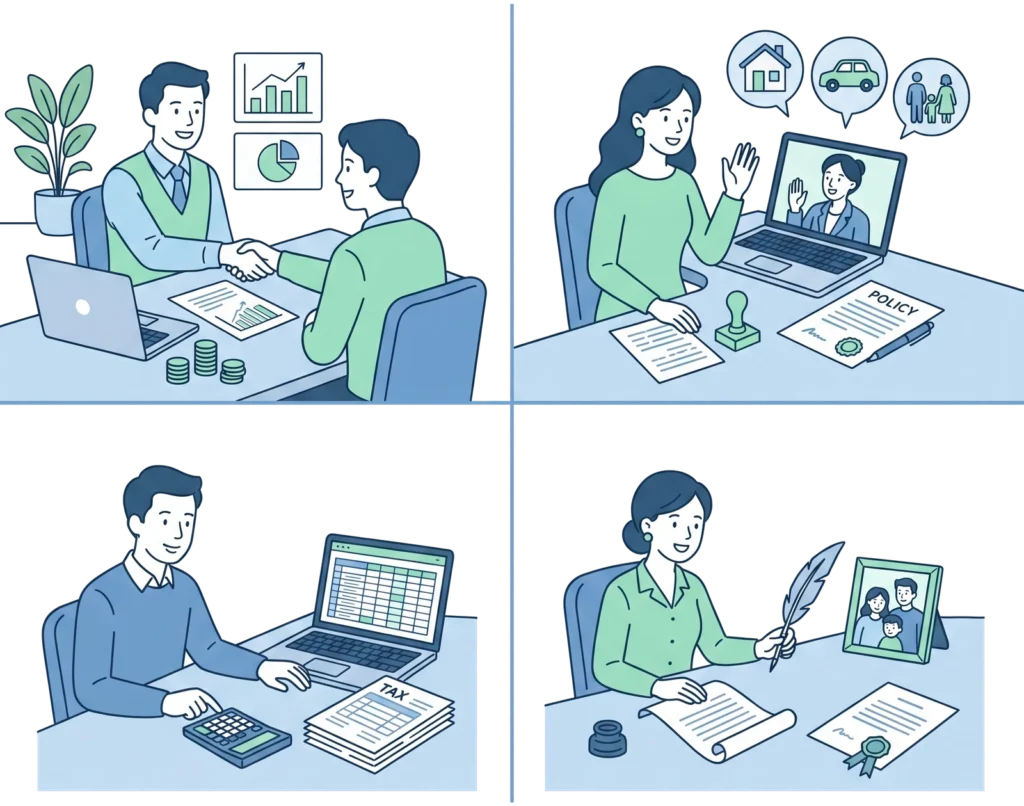
Answer the questions
Plain questions about your family, your property and who you trust. No legal vocabulary to decode.
Read every draft
Your documents are generated and you read them in full. Change anything that is wrong before you go a step further.
Sign with an online notary
You verify your identity, then meet a commissioned notary on video. The session runs 10 to 15 minutes, witnesses included.
Get your sealed PDFs
Signed, notarized and sealed documents land in your account. Download them, print them, or share them with the people who need them.
The whole bill, before you start
Two items sit outside the plan price. You see both before you pay, never after.
The four documents
One person, paid once. $249 covers a couple, and the second person gets their own four documents rather than a copy of yours.
Online notarization
For one person, or $100 for a couple. That is the live video session, the notary’s seal and the witnesses, in one price.
Changing things later
Edits are free for 30 days. After that, unlimited edits for life cost $39 once, so a change of mind never turns into a bill each time.
A single person signing this week pays $274. A couple pays $349. There is no subscription, no renewal, and no charge for keeping the documents in your account.
The questions people ask about Wills
Who witnesses the signing?
Witnesses come with the notary session, so you are not ringing round asking neighbours to give up an evening. Most states require them for a Will, and a Will witnessed by someone who stands to inherit is exactly the kind of thing that gets challenged later.
Can I name a guardian for my children?
Yes, and you can name a second choice in case the first cannot serve. A court is not bound by your choice, but it carries real weight, and naming nobody leaves the decision entirely to a judge who never met your family.
What if I move to another state?
Open your plan, change your address, and the documents are rebuilt against the rules where you now live. You re-sign only the ones that changed. A move is the single most common reason people come back, so it is worth doing rather than assuming the old file still fits.
Where do the signed documents live?
In your account, as sealed PDFs with the notary’s certificate attached. Download them, print a copy for the folder your family knows about, and give your executor access. A Will nobody can find does the same job as no Will at all.
Put it on record this afternoon
The questions take one sitting. You pay when you are ready to generate the documents, and you read every one of them before anything is signed.
Not sure a Will is the right one? Read what a Trust changes or ask us first.
MyEstateAngel is not a law firm and does not provide legal advice. Your documents are built from templates written and reviewed by attorneys for your state.