Keep the house out of probate court
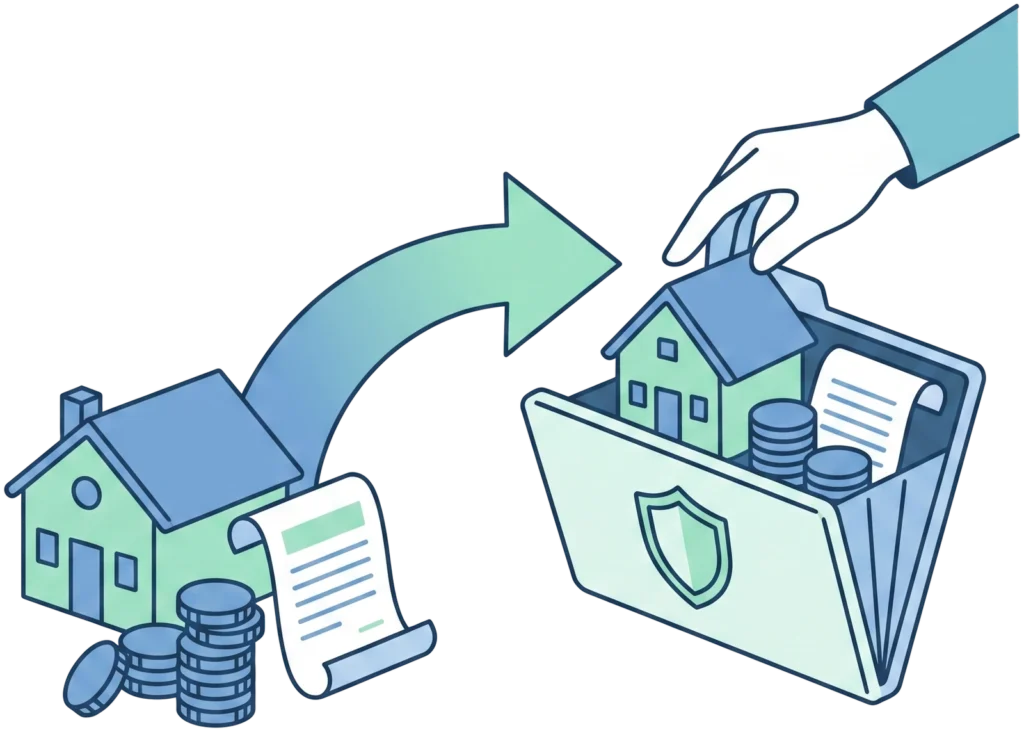
A Trust holds your assets while you are alive and hands them over when you are not, without a judge supervising it. Your family gets the house without filing anything public, and the plan includes every document the Will plan has.
Answer the first questions free. You pay when you are ready to generate the documents.
The court process a Trust is built to skip
Probate is how a court confirms a Will is genuine and supervises the handover. Three things about it push people toward a Trust.
It takes time. Months, in most counties, sometimes longer where the docket is busy. Until it finishes, the house cannot be sold and accounts stay frozen.
It is public. The filing lists what you owned and who received it. Anyone can read it, including people you would rather did not.
Somebody has to run it. That somebody is your executor, usually while grieving, usually without ever having done it before.
A Trust replaces that. Assets held by the Trust pass under its own terms, privately, without a hearing. The catch is real and worth saying plainly: this only applies to assets you have actually moved into the Trust.
Eight documents, and the four from the Will plan are all in here
The Trust plan is not a different product with a Will bolted on. It contains the whole Will plan and adds the four documents that make a Trust work in practice.
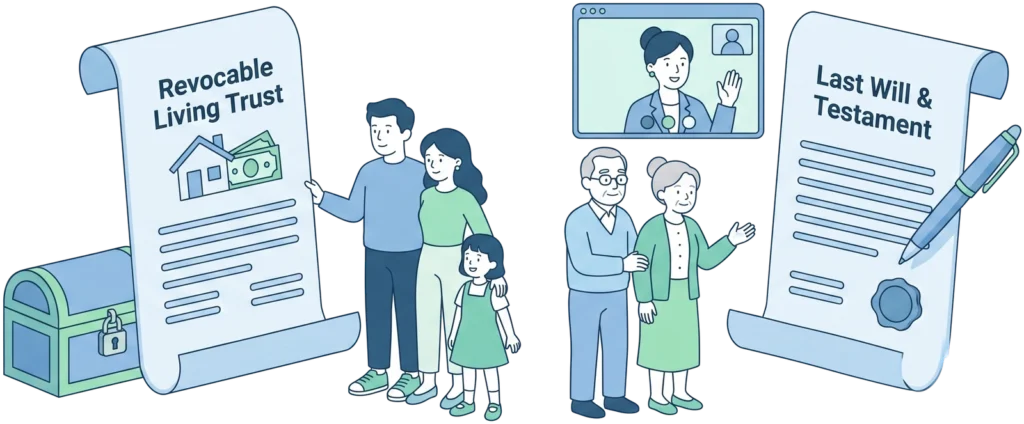
Revocable Living Trust
The document itself. You stay in control while you are alive and can change or cancel it whenever you like. On your death it passes what it holds to the people you named, without probate.
Schedule of Assets
One list of everything the Trust holds, from the house to the savings account. It is also the document your executor will thank you for, because it is the only place the whole picture sits together.
Funding Instructions
Asset by asset, what to send and who to send it to. This is the document that decides whether your Trust works, and it is the one people leave in the folder unread.
Certification of Trust
A short proof that the Trust exists, for banks and brokerages that ask. You hand this over instead of the full Trust, so a teller never reads who inherits what.
Pour-Over Will
Your safety net. Anything you forgot to move into the Trust is caught by this Will and sent there after your death. It also names a guardian if you have children under 18.
Advance Care Directive
The treatment you want and the treatment you refuse, written down while you can still say it. A Trust deals with your property; this one deals with you.
Power of Attorney
Authority for one person you name to handle money and property if you cannot. It covers the things a Trust does not reach, like filing your taxes or dealing with the mortgage company.
HIPAA Authorization
Permission for named people to hear your medical information. Without it, the hospital can decline to tell your own family what is happening, and the directive above becomes hard to act on.
An empty Trust protects nothing
Signing a Trust creates the container. Moving assets into it is a separate act, and it is where most home-made trusts fall apart: the document exists, the house is still in the owner’s own name, and the family ends up in probate anyway.
Your Funding Instructions handle this one asset at a time. Retitle the bank account. Update the brokerage. Send the letter the insurer needs. None of it is difficult, and all of it has to actually happen.
Anything you miss is caught by the Pour-Over Will, which sends it to the Trust after your death. That works, but it goes through probate to get there, which is the thing you paid to avoid.
Moving your home into the Trust
The house is the asset that makes the difference, and it needs a new deed rather than a letter. That is a separate service and it runs like this:
- A legal team draws up the deed and a licensed real estate attorney reviews it, usually within 4 to 12 hours.
- You sign that one page in front of a local notary. Recording rules require a physical signature, so this is the single step that is not done over video.
- It is filed with your county recorder and the filing is confirmed back to your account. Most transfers finish in 2 to 4 weeks, depending on your county.
$399 plus your county’s recording fee. Optional, and only worth doing if you own property you want inside the Trust.
From the first question to a sealed PDF
The same four steps whichever plan you pick. You are never handed off without being told, and nothing is filed or signed while you are looking the other way.
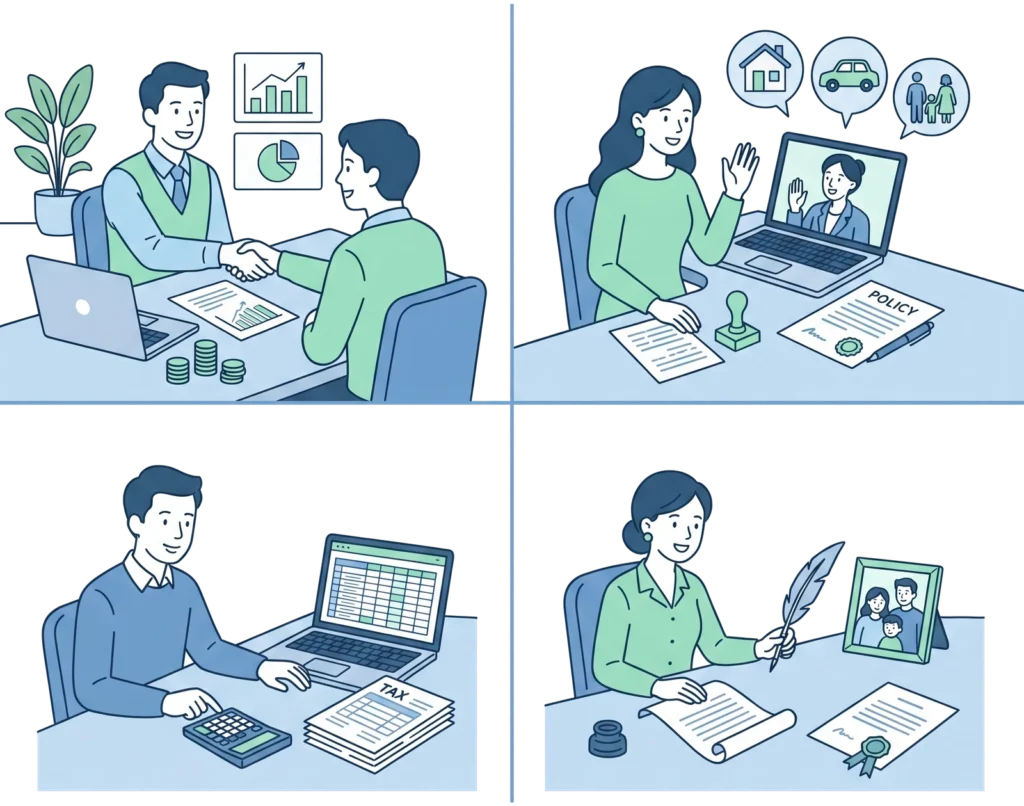
Answer the questions
Plain questions about your family, your property and who you trust. No legal vocabulary to decode.
Read every draft
Your documents are generated and you read them in full. Change anything that is wrong before you go a step further.
Sign with an online notary
You verify your identity, then meet a commissioned notary on video. The session runs 10 to 15 minutes, witnesses included.
Get your sealed PDFs
Signed, notarized and sealed documents land in your account. Download them, print them, or share them with the people who need them.
Start with the questions, decide after
The first few questions are free and they sort out whether you need a Trust at all. You can switch to the Will plan at any point before you pay, and nothing is generated until you say so.
Still weighing it up? See what the Will plan covers or ask us before you spend anything.
MyEstateAngel is not a law firm and does not provide legal advice. Your documents are built from templates written and reviewed by attorneys for your state.