
Elder law and estate planning are two complementary fields that every senior should understand together rather than separately. Estate planning determines what happens to your assets after death. Elder law protects your health, finances, and independence while you are alive. Most people over 60 need both.
This practical guide to U.S. law explains the differences, key documents, and most common mistakes so you can make informed decisions to protect your family. This is not legal advice.
In short:
- Estate planning determines what happens to your assets after death, while elder law protects your health and finances during your lifetime.
- Most adults over 60 need both areas of law, rather than just one.
- Retirement accounts and life insurance policies pass according to beneficiary designations, which take precedence over a will.
- A durable power of attorney remains valid even if you become incapacitated, which is precisely when it is most needed.
- Medicaid eligibility depends on look-back periods, so planning should begin several years in advance rather than during a crisis.
- Many estates avoid full probate proceedings, and thresholds and procedures vary by state and change over time.
- The most common mistakes include missing or outdated documents, failing to establish a power of attorney, and making improper gifts that violate Medicaid rules.
Elder Law vs. Estate Planning: The Core Difference in Plain English
Estate planning governs what happens to your assets after you die; elder law protects your health, finances, and independence while you are still alive. Most adults over 60 need both, not one or the other. Think of it this way: one plans for your legacy, the other for your longevity.
Estate planning is the legal process of arranging how your property passes to others after death. It serves people of every age, especially those with children or meaningful assets. Elder law takes a different lens. It focuses on older adults and anticipates future needs: long-term care, medical decisions, and protection from financial exploitation.
Why both overlap for adults 60+
These two disciplines rarely stay in separate lanes. Elder law and estate planning frequently overlap, particularly for adults in their 60s and beyond, who typically require both at once. A senior may need a trust to pass on a home and a durable power of attorney in case of future incapacity. The same family, the same goals, two toolkits working together.
When each one takes the lead
A rough, practical guideline helps. Traditional estate planning tends to serve adults roughly 18 to 65, especially those with families or substantial assets, while elder care protection becomes central around age 60 and up. Treat these brackets as orientation, not law. They reflect a practitioner’s experience rather than any statutory rule.
Because state law can materially change outcomes, confirm your situation with a licensed attorney in your state before acting.
Side-by-Side: Goals, Timing, and Tools of Each Discipline
The cleanest way to see the gap between elder law and estate planning is to compare them across three dimensions: what each one is trying to achieve, when it takes effect, and which legal tools it relies on. They overlap, but they are not the same.
Estate planning aims to transfer your assets after death. Its primary tools are wills, trusts, and beneficiary designations, and most of its work takes effect only once you pass away.
Elder law takes the opposite vantage point. It protects your health, finances, and autonomy while you are still alive, using durable and medical powers of attorney, advance directives, and long-term-care and Medicaid planning that must be put in place during your lifetime.
| Dimension | Estate Planning | Elder Law |
|---|---|---|
| Primary goal | Transfer assets after death | Protect health, finances, and autonomy during life |
| Timing | Takes effect at death | Acts throughout your lifetime |
| Core tools | Wills, trusts, beneficiary designations | Durable/medical POA, advance directives, long-term-care and Medicaid planning |
| Who it serves | Adults of any age, especially those with family or assets | Older adults anticipating care needs |
Who each one serves
Estate planning suits adults at nearly any stage, while elder law centers on older adults anticipating future medical and long-term-care needs. In practice, people over 60 usually need both disciplines working together.
One caveat matters: these are general U.S. principles. Probate rules, Medicaid eligibility, and document requirements vary by state. State rules vary. For example, the laws in Idaho, Ohio, Kentucky, Michigan, and Arkansas may differ, so confirm the specifics with a licensed attorney in your state.
The Essential Estate Planning Documents Every Senior Should Have
A complete estate plan usually includes a will, one or more trusts, and up-to-date beneficiary designations. Each tool controls different assets, and they override one another in a specific order. Beneficiary designations, for example, can bypass probate and even trump what your will says.
Wills vs. revocable living trusts
A will is your core instruction document. It names who inherits your property, nominates an executor, and takes effect only after death, usually after passing through probate. Estate planning uses wills and trusts together so your wishes are actually carried out.
A revocable living trust works differently. You fund it during your lifetime, keep control while you are alive, and your successor trustee distributes assets without probate when you die. Trusts and careful planning can also minimize tax liability and avoid probate delays. Careful planning using trusts can help minimize tax liabilities and reduce estate taxes.
Beneficiary designations that override your will
Here is a trap many seniors miss. Retirement accounts, life insurance, and payable-on-death accounts pass by beneficiary designation, not by your will. If your will says one thing but the account form says another, the form controls. Review these designations after every major life change.
Guardianship nominations for dependents
Your estate plan can also name a guardian for minor children and even include provisions for pets. For a child or adult with disabilities, a properly drafted special-needs trust can hold assets without disqualifying them from means-tested public benefits.
Whether an estate must go through probate depends on state law, how assets are titled, and your beneficiary designations. Confirm the details with a licensed attorney in your state.
The Elder Law Toolkit: Powers of Attorney, Medicaid, and Long-Term Care
If estate planning decides what happens after you die, elder law builds the safety net for while you are still alive but may no longer be able to manage your own affairs. Its core tools are powers of attorney, advance directives, and long-term-care and Medicaid planning. They work best when put in place early, long before a crisis.
Durable and medical powers of attorney
A durable power of attorney lets a trusted agent manage your finances and legal matters if you become incapacitated. A medical power of attorney (sometimes called a healthcare proxy) names someone to make medical decisions when you cannot speak for yourself. The durable label matters: it keeps the document valid through incapacity, which is exactly when you need it.
Elder law also covers protection against financial abuse and exploitation, and, when no valid documents exist, court processes like guardianship and conservatorship. Seniors are more vulnerable to fraud, making protection against financial abuse and exploitation an important part of elder law.
Advance healthcare directives
An advance directive records your wishes about life-sustaining treatment and end-of-life care. Paired with a healthcare proxy, it spares your family from guessing. Attorneys often use these tools together to prepare clients for nursing-home care, incapacity, and conditions such as Alzheimer’s or dementia. An elder law attorney can help you prepare for nursing-home care, incapacity, and long-term care, particularly in cases involving Alzheimer’s disease or dementia.
Medicaid and long-term-care planning
Medicaid can help cover long-term care, but eligibility is tied to look-back periods that scrutinize past asset transfers. That is why protection must be structured years before the need arises, not in the middle of a crisis. Lawful Medicaid planning restructures assets and income to qualify while preserving some wealth for loved ones.
Avoid specific dollar thresholds you read online: Medicaid rules are state-variable and change over time. Never hide assets or make improper gifts to beat the rules. Confirm current eligibility limits with a licensed attorney in your state.
How Probate Works and Why Many People Try to Avoid It
Probate is the court-supervised process that validates a will, settles debts, and transfers what remains to heirs. Whether an estate must go through it depends on state law, how assets are titled, and who you name as beneficiaries. Skilled estate planners can help a family avoid or shrink probate and save on estate taxes.
What probate does
When someone dies, the court appoints a personal representative to inventory assets, notify creditors, pay valid debts and taxes, and distribute the rest under the will or state intestacy rules. The process is public, and it can take months. The larger or more contested the estate, the longer and costlier probate tends to run.
Assets that skip probate
Not everything you own passes through the court. Assets with valid beneficiary designations, such as retirement accounts and life insurance, transfer directly to the named person and can override instructions in your will. Jointly titled property and accounts with payable-on-death or transfer-on-death designations typically pass outside probate too. Well-structured trusts do the same while minimizing tax exposure.
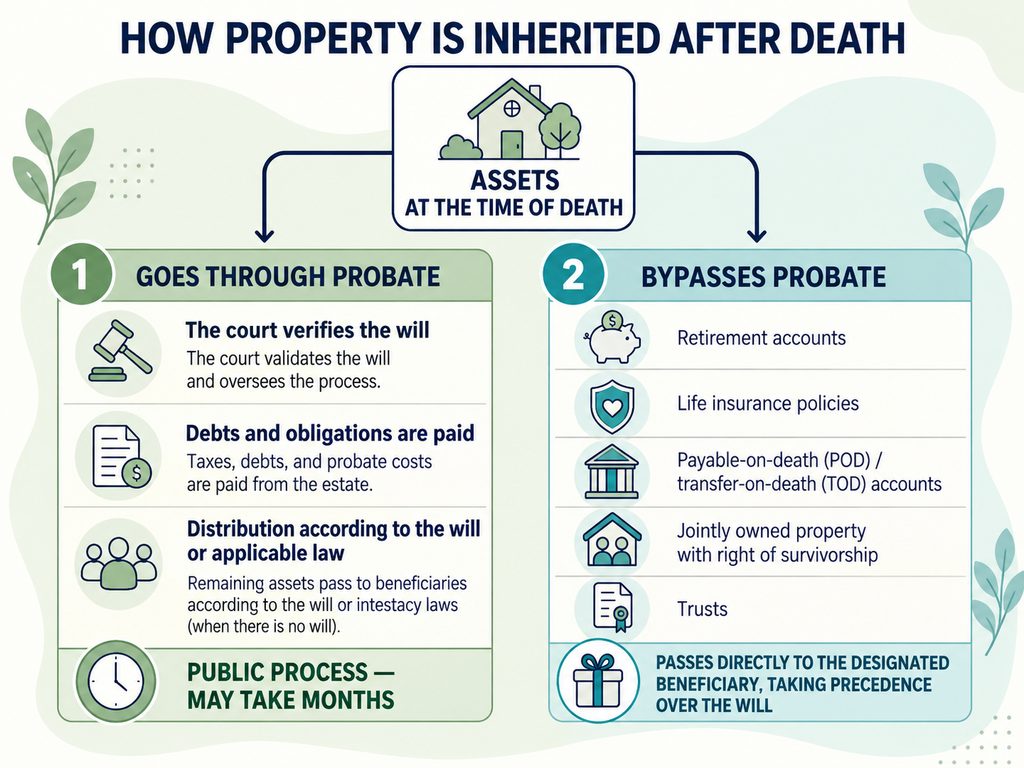
Do all estates go through probate?
No. Many estates avoid full probate entirely, and most states offer simplified or small-estate procedures for modest estates. The exact dollar thresholds and rules differ sharply from state to state and change over time, so a figure that applies in one state may be wrong in yours. Confirm the current small-estate limits and procedures with a licensed attorney in your state before you rely on them.
The Biggest Elder Law and Estate Planning Mistakes to Avoid
The costliest errors in elder law and estate planning are predictable: outdated or missing documents, no durable power of attorney, improper asset transfers, and treating one state’s rules as if they applied everywhere. Each one is avoidable, and most trace back to the same root cause, skipping candid conversations with a qualified attorney.
Outdated or missing documents
Dying without a comprehensive plan can trigger family disputes and costly, emotionally draining court battles over who inherits what. A clear plan reduces conflict among heirs.
Equally damaging is letting a plan go stale. Your plan should be reviewed regularly, because marriages, divorces, births, deaths, and major financial changes can all undo your original intentions. A will naming an ex-spouse or a beneficiary form that was never updated is a classic, expensive mistake.
Improper gifting and Medicaid missteps (lawful only)
Medicaid eligibility is subject to a look-back period, so improper gifting or last-minute transfers can disqualify you when you need benefits most. Lawful planning done years in advance is the goal.
Never hide assets, falsify records, or attempt to evade eligibility rules. That is fraud, not planning. Exact limits are state-specific and change over time, so confirm them with a licensed attorney in your state.
What not to withhold from your attorney
Tell your attorney everything: prior gifts, debts, a strained second marriage, an unmarried partner, or out-of-state property. Concealment does not protect you; it produces a plan built on wrong facts.
Second marriages, blended families, and unmarried couples
Blended families and unmarried couples face heightened risk, since default state inheritance rules may ignore a stepchild or an unmarried partner entirely. Spell out your wishes in writing, and verify the outcome with a licensed attorney in your state.
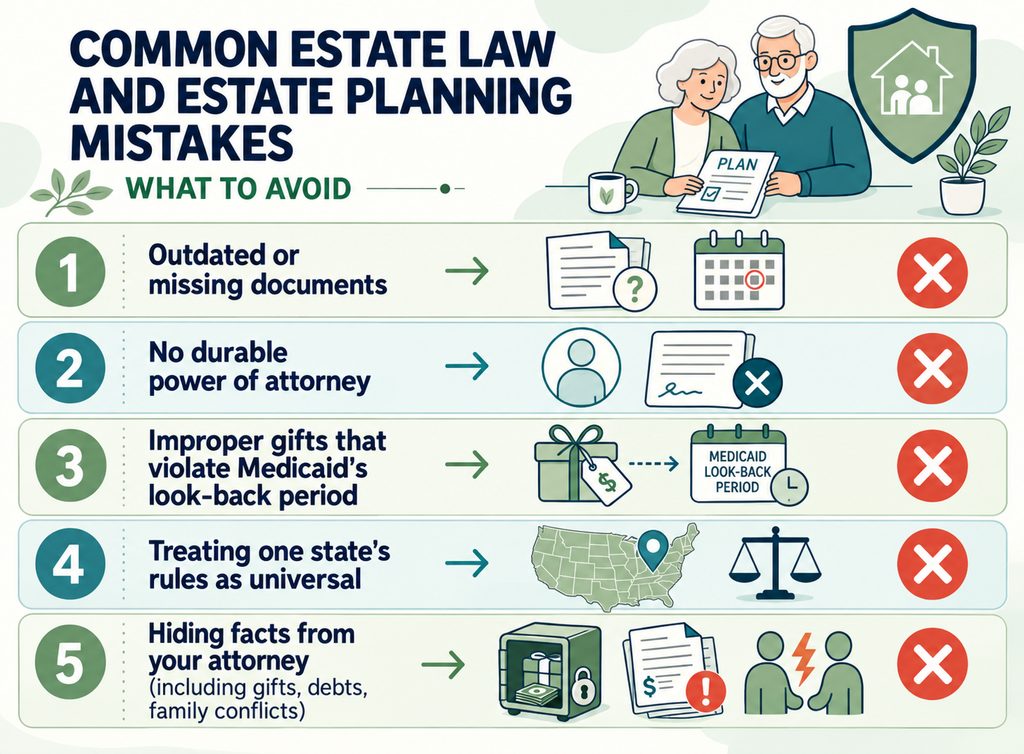
Quick Answers to the Questions Families Ask Us Most
Who benefits most from estate planning?
Virtually every adult benefits from estate planning, not just the wealthy or the elderly. Estate planning serves people of any age, especially those with a family or meaningful assets. Elder law, by contrast, focuses on older adults and anyone planning for long-term care or incapacity. Most adults over 60 need both disciplines working together.
Do all estates have to go through probate?
No. Whether an estate goes through probate depends on your state’s law, how assets are titled, and your beneficiary designations. Many assets, such as retirement accounts, life insurance, and jointly held property, can pass outside probate entirely. A well-structured plan often routes most of your estate around the court process.
State rules differ, so confirm the specifics locally.
What should I never withhold from my estate planning attorney?
Never hide assets, debts, prior gifts, or family conflicts from your attorney. Full disclosure lets them design a plan that actually works and keeps you on the right side of the law. Concealing assets to beat creditors, taxes, or Medicaid rules is unlawful and can unravel the entire plan. Honesty about second marriages, estranged relatives, and business interests matters just as much.
What are the biggest elder law mistakes families make?
The costliest errors are predictable: dying without a plan, which invites family disputes and expensive court battles, and letting documents go stale. Outdated plans and improper gifting that violates Medicaid look-back periods are frequent traps. Update your plan after marriages, divorces, births, deaths, or major financial shifts.
Do I need an elder law attorney or an estate planning attorney?
It depends on your situation. Choose estate planning if your main concern is transferring assets after death; choose elder law if you face aging, incapacity, or long-term care and Medicaid questions. Adults over 60 usually need both. Because state rules vary materially, consult a licensed attorney in your state before you act.
Sources / References
- elderlawrillc.com/the-difference-between-elder-law-and-estate-planning – Elder Law RI LLC – The Difference Between Elder Law and Estate Planning
- tullyelderlaw.com/blog/do-you-need-an-elder-law-attorney-or-an-elder-care-law-attorney-there-is-a-difference – Tully Elder Law – Elder Law vs. Elder Care Law Attorney
- sbwhlaw.com/library/what-is-elder-law-.cfm – SBWH Law – What Is Elder Law?